Cannabinoids are complex molecules we can make when genetically and nutritionally, healthy and nourished. Various genetic differences are known that cause a deficiency in endogenously made cannabinoids – phospholipids. Lack of cannabinoids negatively effects many areas of health throughout the body and brain, the mood and decision making, and appetite, and movement are all affected by cannabinoid availability.
It is discrimination to prevent research from occurring into the medical benefits of cannabis and cannabinoids and to prevent people who need an external source from having access to it. Covid and LongCovid may be increasing the number of people who might benefit from an external source as epigenetic changes or some other effects of the viral infection may be causing dysfunction in normal production of cannabinoids or some other problem.
Cannabinoids and the Cannabinoid receptors perform many functions in the body.
Membranes and growth of tissue is affected directly as building blocks that are part of the membranes, and indirectly as messenger chemicals that help promote and guide growth.
Cannabinoids also have widespread effects on immune function in addition to brain and nerve function. Cannabinoid receptors are found throughout the brain and also on white blood cells, leukocytes. Our immune function also needs endogenous, internally made, cannabinoids, or would benefit from an external source if endogenous cannabinoids were not able to be made normally.
“In human leukocytes the expression of cannabinoid receptor mRNA has been reported to be lower than that found in brain tissue. The message has, however, been detected in all subsets of leukocytes examined. The message levels are greatest in S cells, followed sequentially by natural killer cells (NK), polymorphonuclear neutrophils (PMN), T8 cells, monocytes and T4 cells.” (11)
Leukocytes help us fight viral infections and patrol for other infectious pathogens or precancerous or cancerous cells. Nutrients work together, synergy – increased power together than any on their own. We need magnesium for leukocytes to be able to perform the killing, apoptosis, and we need niacin to help with the safe removal of debris or engulfing of virus or small cells. Cell contents that are spilt into surrounding tissue has to be removed or it causes more inflammatory damage and can lead to death of other cells.
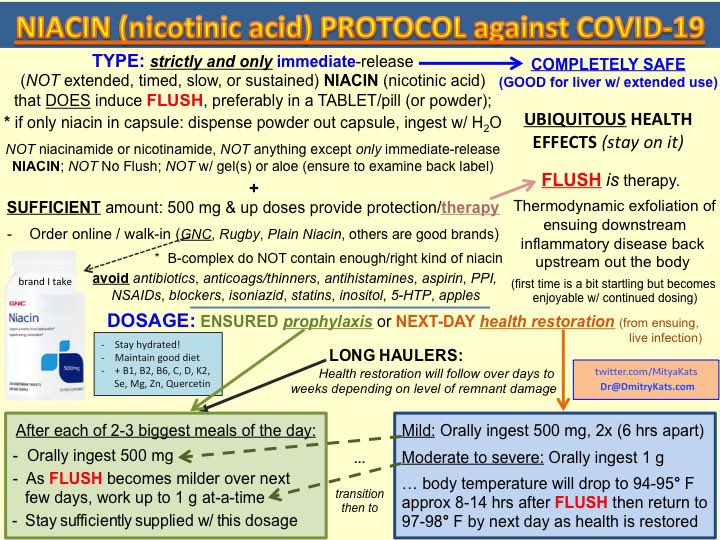
Niacin reduces inflammation for us in some direct ways and indirectly by inhibiting the NF-kB inflammatory pathway. Deficiency may increase neurodegeneration as well as reduce immune function for fighting virus or cancer.
“Reports suggest that deficiency of niacin can increase the risk of neurodegeneration, immunological disorder and inflammation stress [14]. Additionally, niacin exerts its anti-inflammatory effect by suppressing the NF-κB pathway [15].” (18)
The cannabinoid system is also involved in neurotransmitter levels.
“According to previous studies, CB1r [Cannabinoid Receptor type 1] is located in the locus coeruleus (LC) and in the dorsal raphe nucleus (DRN), and it regulates noradrenaline (NA) and serotonin (5HT) release, respectively, by the modulation of GABAergic and glutamatergic terminals (117, 118).” (17)
Problems with the endocannabinoid system can affect mood such as changes in serotonin leading to anxiety or depression. Adequate niacin intake helps preserve our serotonin levels by sparing tryptophan.
“Genetic studies pointed out interesting results regarding the involvement of polymorphisms or epigenetic modifications of CNR1 as susceptibility/risk biomarkers to develop anxiety disorders. Lazary and cols. analyzed the interaction of the promoter regions of the serotonin transporter (5HTT; SLC6A4) and CNR1 genes on anxiety. Specific constellations of CB1r and 5HTT promoters were closely associated with high or low synaptic 5HT concentrations, which could result critically in the vulnerability to experience an anxiety disorder (124). Hay and cols. employed CRISPR/CAS9 technology to disrupt a highly conserved regulatory sequence (ECR1) of the gene encoding CB1r (CNR1).” (17)
Cannabinoid system differences occur in ethnic & gender groups. We may be equal but we are not all the same.
Who has the gene differences may vary with ethnicity. “With 60 DNA samples (120 alleles) for each of the 4 ethnic groups studied, we had 90% power to detect a variant allele with a true population frequency of ≥ 2% [16]. ” “Twenty-five SNPs were observed in BHMT — 17 in AA, 8 in CA, 9 in HCA, and 10 in MA subjects (Table 1 and Fig. 2 upper panel).” (1) Number of cannabinoid receptors has been found to vary based on ethnicity and gender with people of Caucasian background having the most, people with African/black background having slightly fewer, and Asian having significantly fewer than those of people with Caucasian or African ethnicity. (11)
“The relative levels of the 58 kDa CBI protein 1070 E.S. Onaivi et al. from the male volunteers were, 47.4%; 39.0% and 13.6% for the White, Black and Asian blood samples respectively as shown in Fig. 3. The relative levels of the Cl31 protein in the male and female volunteers were 49.6%, 32.2% and 18.2% for the white and black females in comparison to the black male blood samples respectively as shown in Fig. 4. Therefore in both males and females, the cannabinoid receptors appear to vary by gender and ethnicity, for example Fig. 3 show white male > black male > Asian male and Fig. 4 show white female > black female > black male.” (11)
African Americans were found to have variations in the BHMT gene almost twice as often than Caucasian and Mexican-American ethnic groups and Hans Chinese American were least likely (small group study). (1)
The BHMT gene and Endogenous Cannabinoid production & breakdown.
The BHMT gene encodes an enzyme involved in homocysteine metabolism and the production of amino acids methionine, and dimethylglycine from betaine. (2) The BHMT enzyme is visualized in a graphic of the folded shape, made up of four parts, monomers, coupled into two sets of dimers, figure C: (1.1).
The BHMT enzyme is also involved in about 60% of the glycerophospholipid production pathway (2) which means important cannabinoids may not be able to be made internally and would need to be obtained in the diet or other sources or suffer deficiency symptoms chronically. People with Cystic Fibrosis also can’t make cannabinoids however the fatty acid end of the molecule is what can’t be made normally. The BHMT gene difference would disrupt production of the glycerophosphate end of the larger cannabinoid molecule. PA, PE, PI, and PS production might be reduced or dysfunctional and breakdown of LPC and LPE which might lead to some types of cannabinoids being unavailable and others unable to be broken down and remove normally so excess might collect -unknown by me. (3)
- Phospholipids: PA, phosphatidic acid; PE, phosphatidylethanolamine; PC, phosphatidylcholine; PS, phosphatidylserine; PG, phosphatidylglycerol; CL, cardiolipin; PI, phosphatidylinositol. (15)
- LPC, lysophosphatidylcholine; LPE, lysophosphatidylethanolamine, (19)
Research in cannabinoid chemistry was limited to toxicity or addiction due to the rescheduling of marijuana by the Nixon administration as nonmedical. Since the differences in function of the endocannabinoid system varies with ethnic group it is somewhat genetic discrimination to as well as racial discrimination to target an ethnic group with a law that wouldn’t affect all ethnic groups equally. Someone unable to make cannabinoids would have more craving and physical need for a rich source of phospholipids or cannabinoids, than a person with normal ability to make cannabinoids and/or a low or normal amount of cannabinoid receptors compared to someone with many of them.
Cannabinoid receptors effect mood, & may be involved in anxiety, depression, and possibly suicide.
Lysophosphatidylcholine, LPC, can cause an increase in calcium flow into cells at an atypical cannabinoid receptor GPR55 (4, 5) which is excitatory. Over activity, excess calcium entry, might be a negative to cell health. During normal activation levels the atypical cannabinoid receptor has anti-depressant effects and may help prevent suicide as the brains of suicide victims have fewer GPR55 receptors than typical. (14)
“This result, plus the observation that GPR55 increases intracellular calcium, suggests that GPR55 activation enhances neuronal excitability. These findings, together with the preferential expression of GPR55 on large-diameter DRG neurons, which can be involved in nociception, particularly in neuropathic or inflammatory pain states (29–31), suggest that GPR55 may have a pronocioceptive [pain increasing] role.” (5)
So overactivity of the GPR55 receptors might be perceived as chronic pain and might affect mood and suicidal ideation. Cannabinoid receptors in the prefrontal cortex (CB1) are also known to be involved with suicide risk from research with people suffering from anorexia (17) or alcoholism and depression. (16)
Cannabinoids also can reduce oxidative stress & inflammation, and may be helpful for preventing or treating neurocognitive degeneration conditions.
Calcium can cause oxidative stress damage and would be increased during times of strenuous activity or infection or other times of increased metabolism. THC can cross the blood brain barrier and can help reduce oxidative stress and may be helpful for treatment of neurocognitive degeneration. It was found to improve glucose use within cells and improve brain function in other ways with no toxicity problems in an animal based study. (12)
“In silico analysis predicted THC to be permeable across the blood-brain-barrier. THC was also predicted to have an oral LD50 and toxicity class values of 482 mg/kg and 4 respectively. These results indicate that C. sativa improves glucose consumption with concomitant suppression of oxidative stress and cholinergic dysfunction, and modulation of purinergic and gluconeogenic activities in brain tissues.” (12)
Personal experience – I have a double BHMT allele – it isn’t something I would recommend trying yourself.
I have experience of a lifetime without typical cannabinoid production and the symptoms that may cause. There is a double allele of my BHMT gene which means I can not make some endocannabinoids and can’t break down others. A double allele means both copies contain the same difference from typical. (post, see # 3 in the first list) So I can’t make the BHMT enzyme at all. I supplement with dimethylglycine and methionine since finding out and it helped. I need to continue daily though as genetic metabolic differences mean lifelong symptoms of deficiency of the nutrients that are affected, or an excess of a chemical metabolite that normally would be broken down sooner so it wouldn’t collect.
Post: Clinical Endocannabinoid Deficiency, (CED), and phospholipids. Excerpt:
Conditions that may involve Clinical Endocannabinoid Deficiency, (CED):
Conditions that may involve a deficiency in cannabinoids chronically may include symptoms of pain, muscle spasms, nerve numbness, mood disorders, movement disorders, digestive and appetite problems, appetite and growth failure in infants or colic, menstrual problems and infertility/miscarriages and hyperemesis prenatally.
- Pain/inflammation: Migraines, Fibromyalgia.
- Mental health: Anxiety, PTSD, Major Depression, Bipolar disorder, Motion Sickness, The balance of cannabinoids (2-AG ~ noneuphoric CBD and anandamide ~ euphoric THC) is a problem in schizophrenia. There is too much of the anandamide, excess THC can cause schizophrenia like symptoms, and providing CBD may help patients. *See this post for more nutritional deficiencies that cause schizophrenia like symptoms, five or more may be involved, suggesting the problem is a symptom rather than a condition with a single cause – and a single cure: The voices that people with schizophrenia are hearing are probably their own inner thoughts.
- Nervous system: Multiple sclerosis, Diabetic Neuropathy, Brachial plexopathy, Causalgia, Phantom limb pain, Glaucoma, Huntington’s, Parkinson’s, Cystic Fibrosis,
- Appetite/digestive system: Anorexia & Bulimia, Neonatal Failure to Thrive, infantile Colic, Irritable Bowel Syndrome.
- Fertility/reproductive system: Dysmenorrhea, Hyperemesis, repeated miscarriages (Russo 2016), (anandamide is needed for implantation of a fertilized egg in the uterus and development of the placenta to occur normally, too much or too little can disrupt the process, Fonseca 2013), male infertility due to sperm motility problems is associated with low levels of anandamide (AEA) (Amoako 2013), (too much can also negatively affect male or female fertility). *See this post for more details about infertility and phospholipids: (Phospholipid or phosphorylation deficiency: Potential symptoms)
- Other food sources of cannabinoids exist in addition to marijuana or hemp however the amount provided is in lower concentrations so you might need a large salad that includes several sources at one meal, and other sources in beverages, supplements, or at other meals.
— Addition to the excerpt – the amount of cannabinoids in medical marijuana is a lot more, and more likely to be obviously helpful, than the amount of phospholipids or cannabinoids found in a few foods and spices. Sadly medical marijuana has been stigmatized and illegal for many decades. Research into medical benefits was prevented with Richard Nixon’s administration rescheduled cannabis as having no medical value. Research was only possible on addiction or toxicity. Marijuana/cannabis not only has medical value, it has been used medicinally or in other ways by humans for thousands of years. Paper and rope made from hemp fiber was also a large industry prior to making cannabis illegal.
Conditions I’ve had symptoms of which might be due to Clinical Endocannabinoid Deficiency.
The conditions/symptoms I’ve had over my life from the above list include: Migraines, Fibromyalgia; Anxiety, PTSD, Major Depression, Bipolar disorder; Anorexia & Bulimia, Irritable Bowel Syndrome; and some nerve/numbness symptoms since childhood – dystonia.
The amount of cannabinoids a human needs if they are unable to make them internally/endogenously is not readily available information due to the lack of research. The amount of medical marijuana that I find necessary to feel nerve flow in my fingers and throughout my body and to have other symptoms improve is quite a bit each day. It adds up in money to buy, and time and stigma to use.
Smoking is frowned upon by society and cannabis use is still treated as if it is just an addiction or even criminal (which it still is at the Federal level), so it frightens some people to even learn that you use it, or have used it recently. Chronic users have adapted a tolerance to it (8), and mentally may be more used to functioning with some than going without. The type of strain is important for the terpenes that provide different aroma also provide different health effects. Some can be calming for anxiety (limonene), and another sleep inducing and pain relieving (myrcene).
Daily use every 2-4 hours is what I find helpful and smoking has benefits for dosing. Edibles take longer to feel an effect and then suddenly can be too much. Inhalation effects are fairly immediate and easy to know then when enough has been absorbed. The forms of cannabinoids that are absorbed may vary too with the different intake routes, and inhalation may be more effective for some types of health problems than edible/intestinal absorption. The healthiest I’ve ever felt was when I combined eating some fresh trim or immature buds everyday or edibles along with some smoked bud.
Smoke toxins are a negative that causes the “dopey” effect of the stereotypical marijuana user. Vaping devices exist that heat the bud to a lower temperature so the burnt toxins are not created, however some of the THC conversion occurs at higher temperatures so symptoms may not be helped as much. The vape oil products may have other negative effects on the lungs due to the oil and flavorings being inhaled into the lungs where it can add to pneumonia risk.
How much THC am I getting throughout a day then? Possibly 40% of whatever was in the marijuana you smoked – a lot is lost when you burn the buds. 8 There is approximately 525 mg in an eighth of good medical grade marijuana with 15% THC. (6) That eighth ounce might cost $45-60. One gram per day of 10% THC marijuana might provide 40% of the 100 mg of THC it contains, if smoked vs made into an edible. A quarter to half of a one gram joint every 2-4 hours might be giving 10-20 milligrams of THC each time. Strains that also provide some CBD are important as the cannabinoids work together to do somethings in the body such as inhibit mast cell activation.
Eighty to hundred milligrams of THC is suggested as possibly feeling like an excessive dose all at once for someone with increased tolerance, while 25-80 range might be the typical preferred dose. (8)
I have not calculated this for myself before so it does bring up an interesting question of whether I’m getting too much, or enough, or not enough – the fact that I felt best while also eating fresh trim and other edibles regularly would suggest to me that it is not enough when only smoking and that I do need quite a bit daily.
The non-euphoric CBD has been found safe for use even at 1500 mg per day, though 20-40 mg might be more typically used. (7)
Dronabinol is a capsule form of a THC like medication and it might be prescribed at a 2.5 mg dose twice per day. That might seem like a lot to a new user and not that big of a dose to someone else, although the lack of CBD may be a problem if anxiety is a side effect.
Tolerance levels can reduce after not using for a while and then build back up again. Doses that would seem intense for a new user would not really affect a long term user. (8) Genetics may play more of a role in these differences too, lack of research leaves some questions unasked.
Genetic differences occur in the number of cannabinoid receptors which can effect tolerance for a concentrated source such as medical marijuana.
There can be genetic differences where a person doesn’t make cannabinoids well and has lots of extra cannabinoid receptors, all wanting/ready for cannabinoid activation – but with none or to little available. They might tolerate and prefer a larger dose of THC. Other people might have normal amounts of cannabinoid production and like a smaller dose or none, might not like it. For me it provides feeling throughout my body in a way that I don’t have otherwise. It helps me for muscle knots or spasms and pain. Mentally it helps me with PTSD and anxiety and prevents mast cell histamine excess and hyperexcitability.
Cannabinoids help with learning & forgetting – reshaping nerve pathways – neural plasticity. Pain signal pathways can also be remade more easily with cannabinoids.
Cannabinoids help with learning and nerve flow, and with forgetting – changing nerve pathways to build new as needed and remove the old as they are not needed (old phone number for example). Neural plasticity – changing nerve pathways and synapses between nerves is a function involving cannabinoids. Pain and movement, appetite and growth, cannabinoids affect many functions of the body and neural plasticity can affect pain pathways too – remembered pain in an amputee’s healed wound, and maybe feelings of the missing limb still being there also.
“The same team noted a baseline fragility of serotonergic systems in migraine and fibromyalgia [89], plus the co-occurrence of primary headache in 97% of 201 fibromyalgia patients. In a later study [67], they supported the concept that both disorders represented a failure of serotonergic analgesia and NMDA-mediated neuronal plasticity.” (9)
Synergy – many nutrients work together to perform any action in the body. Magnesium also helps inhibit excess pain nerve signals.
Pain conditions can be caused by deficiency of nutrients or chemicals that inhibit pain sensing nerves. Magnesium is needed to inhibit them as well as cannabinoids. Migraine pain may be not responsive to opiate pain killers. (9)
“A trigeminovascular system has long been implicated as integral to the pain, inflammation and secondary vascular effects of migraine, linked through the NMDA/glutamate system [49]. Cannabinoid agonists inhibit voltage-gated calcium channels, and activate potassium channels to produce presynaptic inhibition of glutamate release [50], without dissociative effects noted with other NMDA inhibitors, such as ketamine.” (9)
*Having adequate potassium and magnesium in the diet and avoiding excess glutamate in seasonings and other dietary sources can also help avoid migraines – in addition to the cannabinoids or cannabinoid receptor agonists – activators.
Diabetes pain may also not be helped by opiates unless magnesium is also provided – and providing magnesium in a larger dose helped even more! (10)
Give the body what it needs to function and it functions. Miracle!
Sunshine might be part of the miracle too – vitamin D represents a group of chemicals which may aid us in ways we don’t know yet. Supplementing with one – vitamin D, may not be providing us others that we would have made if sun or full spectrum/UVB containing light is available. (13)
We need cannabinoids too – and some of us genetically can’t make them – since birth, and potentially – epigenetic changes might be occurring that cause dysfunction in a person’s ability to make cannabinoids at some point later in their life. Is that happening in LongCovid survivors? -discussed in the last post.
Disclaimer: Opinions are my own and the information is provided for educational purposes within the guidelines of fair use. While I am a Registered Dietitian this information is not intended to provide individual health guidance. Please see a health professional for individual health care purposes.
Reference List
- Li F, Feng Q, Lee C, et al. Human betaine-homocysteine methyltransferase (BHMT) and BHMT2: common gene sequence variation and functional characterization. Molecular Genetics and Metabolism. 2008 Jul;94(3):326-335. DOI: 10.1016/j.ymgme.2008.03.013. https://europepmc.org/article/med/18457970
- Figure 3, https://europepmc.org/articles/PMC2515933/figure/F3/
- BHMT Gene (Protein Coding), Betaine–Homocysteine S-Methyltransferase: BHMT Pathways & Interactions, genecards.org, https://www.genecards.org/cgi-bin/carddisp.pl?gene=BHMT#pathways_interactions
- Glycerophospholipid biosynthesis, reactome.org, https://reactome.org/PathwayBrowser/#/R-HSA-1483206
- Drzazga A, Sowinska A, Krzeminska A, Rytczak P, Koziolkiewicz M, Gendaszewska-Darmach E. Lysophosphatidylcholine elicits intracellular calcium signaling in a GPR55-dependent manner. Biochem Biophys Res Commun. 2017 Jul 22;489(2):242-247. doi: 10.1016/j.bbrc.2017.05.145. Epub 2017 May 26. PMID: 28552522. https://pubmed.ncbi.nlm.nih.gov/28552522/
- Lauckner JE, Jensen JB, Chen HY, Lu HC, Hille B, Mackie K. GPR55 is a cannabinoid receptor that increases intracellular calcium and inhibits M current. Proc Natl Acad Sci U S A. 2008;105(7):2699-2704. doi:10.1073/pnas.0711278105 https://www.ncbi.nlm.nih.gov/pmc/articles/PMC2268199/
- Understand Cannabis Weights & Calculate THC Dose, June 5, canuvo.org, https://canuvo.org/cannabis-weight-calculate-thc-dose/
- CBD Dosage: Figuring Out How Much to Take, healthline.org, https://www.healthline.com/health/cbd-dosage#safety-and-side-effects
- Barreda AR, De Leon K and Urmasa S., A simple guide to pot, THC and how much is too much. April 20, 2018, latimes.com, https://www.latimes.com/projects/la-me-weed-101-thc-calculator/
- Russo, Ethan. (2008). Clinical Endocannabinoid Deficiency (CECD): Can this Concept Explain Therapeutic Benefits of Cannabis in Migraine, Fibromyalgia, Irritable Bowel Syndrome and other Treatment-Resistant Conditions?. Neuro endocrinology letters. 29. 192-200. 10.1522/cla.roj.let. https://www.researchgate.net/publication/5448843_Clinical_Endocannabinoid_Deficiency_CECD_Can_this_Concept_Explain_Therapeutic_Benefits_of_Cannabis_in_Migraine_Fibromyalgia_Irritable_Bowel_Syndrome_and_other_Treatment-Resistant_Conditions
- M. Bujalska, H. Makulska-Nowak, S.W. Gumuka, Magnesium ions and opioid agonists in vincristine-induced neuropathy, Pharmacol Rep. 2009 Nov-Dec;61(6):1096-104. http://www.ncbi.nlm.nih.gov/pubmed/20081245
- Onaivi ES, Chaudhuri G, Abaci AS, Parker M, Manier DH, Martin PR, Hubbard JR. Expression of cannabinoid receptors and their gene transcripts in human blood cells. Prog Neuropsychopharmacol Biol Psychiatry. 1999 Aug;23(6):1063-77. doi: 10.1016/s0278-5846(99)00052-4. PMID: 10621950 https://www.researchgate.net/publication/12692236_Expression_of_cannabinoid_receptors_and_their_gene_transcripts_in_human_blood_cells
- Erukainure OL, Matsabisa MG, Salau VF, Islam MS. Tetrahydrocannabinol-Rich Extracts From Cannabis Sativa L. Improve Glucose Consumption and Modulate Metabolic Complications Linked to Neurodegenerative Diseases in Isolated Rat Brains. Front Pharmacol. 2020;11:592981. Published 2020 Nov 24. doi:10.3389/fphar.2020.592981 https://www.ncbi.nlm.nih.gov/pmc/articles/PMC7774498/
- Vitamin D and your health: Breaking old rules, raising new hopes. Updated May 17, 2019, Published Feb. 2007, health.harvard.edu, https://www.health.harvard.edu/staying-healthy/vitamin-d-and-your-health-breaking-old-rules-raising-new-hopes
- Wróbel A, Serefko A, Szopa A, Ulrich D, Poleszak E, Rechberger T. O-1602, an Agonist of Atypical Cannabinoid Receptors GPR55, Reverses the Symptoms of Depression and Detrusor Overactivity in Rats Subjected to Corticosterone Treatment. Front Pharmacol. 2020;11:1002. Published 2020 Jul 8. doi:10.3389/fphar.2020.01002 https://www.ncbi.nlm.nih.gov/pmc/articles/PMC7360849/
- Image/ Figure “General structure of phospholipids and common head groups.” source: Membrane lipids in Agrobacterium tumefaciens: Biosynthetic pathways and importance for pathogenesis researchgate.net, https://www.researchgate.net/figure/General-structure-of-phospholipids-and-common-head-groups-PLs-contain-two-fatty-acids_fig1_261605192
- Hungund BL, Vinod KY, Kassir SA,, et al., Upregulation of CB1 receptors and agonist-stimulated [35S]GTPS binding in the prefrontal cortex of depressed suicide victims. March 2004, Mol Psychiatry 9(2):184-90 DOI: 10.1038/sj.mp.4001376 https://www.researchgate.net/publication/8692237_Upregulation_of_CB1_receptors_and_agonist-stimulated_35SGTPS_binding_in_the_prefrontal_cortex_of_depressed_suicide_victims
- Navarrete Francisco, García-Gutiérrez María Salud, Jurado-Barba Rosa, et al., Endocannabinoid System Components as Potential Biomarkers in Psychiatry. Frontiers in Psychiatry Vol 11, 2020, 31 pp, DOI=10.3389/fpsyt.2020.00315 https://www.frontiersin.org/articles/10.3389/fpsyt.2020.00315/full
- Li R, Li Y, Liang X, Yang L, Su M, Lai KP. Network Pharmacology and bioinformatics analyses identify intersection genes of niacin and COVID-19 as potential therapeutic targets [published online ahead of print, 2020 Nov 10]. Brief Bioinform. 2020;bbaa300. doi:10.1093/bib/bbaa300 https://www.ncbi.nlm.nih.gov/pmc/articles/PMC7717147/
- Lysophosphatidylethanolamine, sciencedirect.com, https://www.sciencedirect.com/topics/agricultural-and-biological-sciences/lysophosphatidylethanolamine